

What need asymmetry taught me about making friends, starting over and leaving room for new people.
Four moves in twelve years will teach you things about friendship that most people never have to learn. Not because you’re wiser, but because you’ve had no choice.
Those moves taught me something I wasn’t expecting: making friends in midlife isn’t always about how much effort you’re willing to put in, as I thought. Sometimes the people around you simply don’t need connection in the same way you do.
And that’s not just something that happens when you move across the country. It can happen many other ways, too: when you retire and suddenly lose the people you saw every day at work; when you get divorced; when your kids leave home; when a longtime friend moves away; when you become a caregiver to a loved one, and your world gets smaller; or when circumstances change and you realize the community you thought you had isn’t quite there anymore.
But the result is always the same: one person needs connection more than the other person does. That imbalance is need asymmetry, and understanding it has changed how I think about adult friendship.
The Math of Belonging
When you’re the person looking for connection, it’s easy to assume that effort is the answer. Go first. Introduce yourself. Accept the invitation. Join the group. Take the class. Talk to the neighbor. Put yourself out there.
All of that matters, of course. But here’s what nobody tells you about making friends as an adult: the people around you aren’t necessarily available in the same way you need them to be.
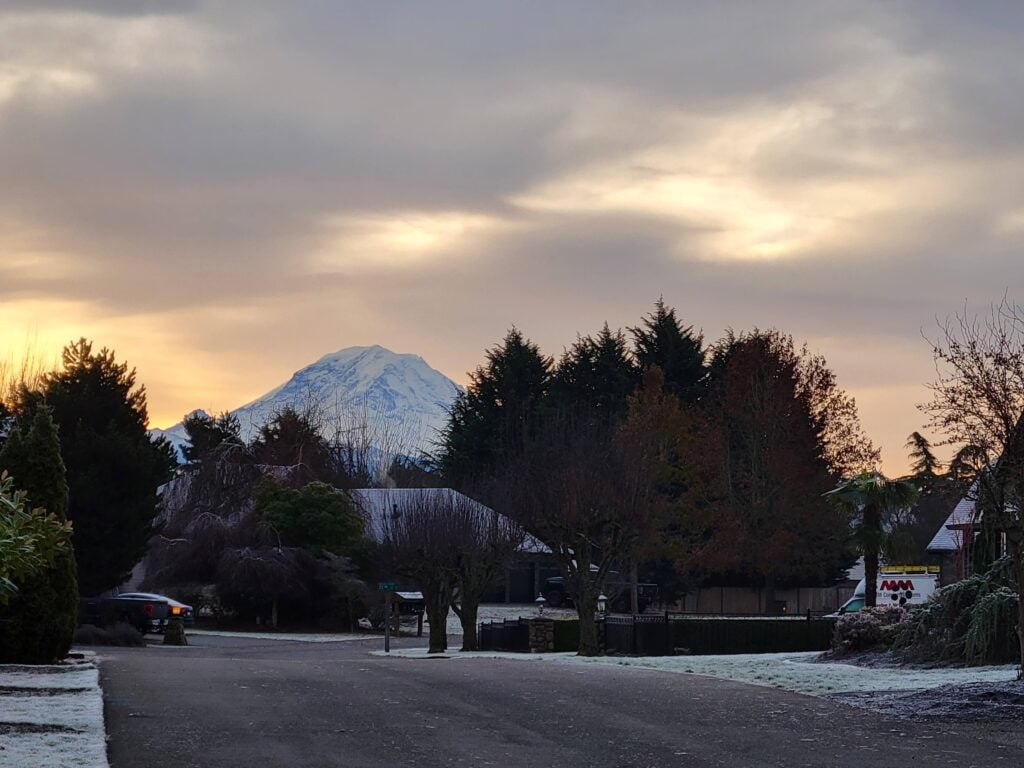
I learned this after moving to Washington State.
When we moved into our neighborhood, many of the people around us had lived there for twenty or twenty-five years. Some proudly introduced themselves as the original owners of their homes. They’d raised their kids on those streets together, and they had history. They had people to call when something broke, someone needed a ride or they wanted company on a Saturday night.
And then there was me. New state. New neighborhood. No established circle.
They weren’t unkind. They’d wave as they walked around the block and make small talk when our paths crossed, but they weren’t looking for connection in the same way I was.
They had a surplus. I had a deficit, and those two states don’t naturally reach for each other.
It Was Never About You
If you’ve ever tried to make friends as an adult and wondered what you were doing wrong, maybe the answer is: nothing.
A few years into living in Washington, I received a last-minute invitation to a neighborhood Bunco night. I knew what had probably happened: they needed another player.
And because I know you need to “put yourself out there and try,” I went. “Maybe this would be the break I need to feel like I belong,” I secretly hoped.
There were twenty-four women there. Someone I knew introduced me around, and because you rotate tables throughout the game, I talked to just about everyone. I had a genuinely good time—which says something coming from an introvert who would almost always rather be home with her dogs.
But I never got another invitation.
And I’ll admit that it stung. Other ladies would comment, “I didn’t see you at Bunco last weekend,” and I would reply, “I didn’t get an invite.” It happened several times.
Eventually, though, I started looking at the situation differently. I realized that their circle was already full. They didn’t need me in the same way I needed them. That night, while I was hoping it might lead to something more, they just needed someone to fill a chair.
We were standing at different points on the “belonging spectrum,” and we wanted different things from that interaction.
Maybe We Need a Different Definition of Friendship

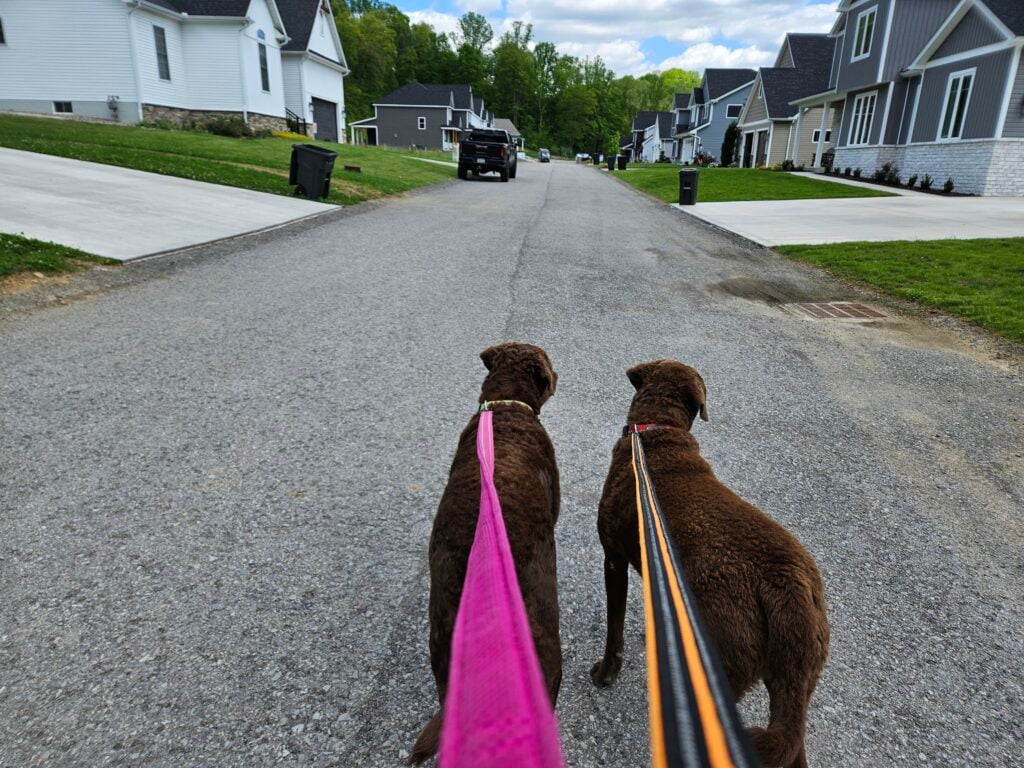
We walked our dogs, Sumi & Taika, several times a day. A few months after moving into our Lake Tapps (WA) home, we met a neighbor, Jonathan, and his Siberian Husky, Kenai. When our paths crossed, we’d walk together and talk a bit. He also introduced us to other neighbors.
That was pretty much it.
We weren’t spending Saturday nights playing cards together or inviting each other over for cookouts. I didn’t even know his last name for quite a while.
Then Jason started traveling for work. I’d be alone for three or four days at a time in a house and a state where I knew almost no one. One night I remember lying awake, running through the what-ifs. What if something happened to the house? What if Sumi got hurt? What if I needed help? Who would I call?
And then I realized there was one door I could knock on.
Jonathan would answer, and that was enough.
He eventually moved to Montana, but I still think of him as one of the most important people from that chapter of our lives. Not because we became incredibly close, but because he made a strange place feel a little less strange.
We tend to measure friendship by depth. Who’s your best friend? Who have you known for twenty years? Who would you call at 2 a.m.? Who do you vacation with?
Those relationships matter, but maybe we need another kind of relationship as we get older, especially when life changes.
It might be the neighbor who notices your other dog isn’t with you, the person you regularly end up having an impromptu walk with, or someone you regularly see at the coffee klatch at the local diner.
They may never become your best friend, but they can still make an enormous difference in your life.
Jonathan taught me that.
And 3.5 years later, after another move, some new neighbors would teach me something else about need asymmetry that I hadn’t understood yet.
A Full Circle Doesn't Have to Be a Closed Circle
When we moved to Morgantown, we already felt good about where we’d landed. Things felt calmer here. We’d had a few experiences that made us think maybe we’d found the kind of place we’d been looking for.
But what happened the morning we moved into our house really got me.
It was a Saturday, and we were standing around waiting for the moving truck to arrive. Across the street, our new neighbors were in their garage.
Jason and Ray met somewhere in the middle of the street and introduced themselves. Jason asked if we could borrow a broom so he could sweep the dirt from the areas where the movers would be walking. By then, I’d wandered over to introduce myself, and Ray’s wife, Holly, came out to meet us, too.
One of the first things she asked was whether we needed a cup of coffee. That alone felt incredibly thoughtful.
We thanked her, borrowed the broom, and went back to the chaos of moving into a new house. A few hours later, Ray and Holly came across the street again.
They wanted us to come over around 6:30 for pizza and beer.
“The last thing you should be worrying about on the day you move in is food,” Ray said.
They also made it clear that there were no expectations attached. They knew we’d be exhausted. We didn’t have to stay long. Come over. Eat something. Have a beer. Go home when we’d had enough.
They invited another couple from the neighborhood, too.
So after spending the day surrounded by boxes and movers, we walked across the street and had pizza and beer with four people we’d barely met and stayed for maybe an hour.
It was one of the kindest things anyone had done for us in years.
And it challenged what I’d come to believe about need asymmetry: Ray and Holly didn’t need new people in their lives, but they made room for us anyway.
You Don’t Have to Need Someone to Make Room for Them
Need asymmetry is still real. When you’re new, lonely, or rebuilding your community, you probably need connection more than the people around you do. Understanding that can help take some of the sting out of relationships that don’t develop the way you’d hoped.
But I’ve realized that need isn’t the only thing that determines whether people connect.
Openness matters, too.
Someone can have lived in the same neighborhood for thirty years and still be curious about the person who just moved in across the street. They can already have friends and make another one. They can have a full calendar and still extend an invitation. They can have absolutely no need for another person in their lives and still decide there’s room for one more.A full life doesn’t have to be a closed life.
And sometimes making someone feel like they belong doesn’t require much. In our case, it was a borrowed broom, an offer of coffee, pizza and beer, and an hour around a table.
Those things probably didn’t feel extraordinary to Ray and Holly, but to the two people who had just moved across the country and were starting over yet again, they were.
Sometimes We’re the Ones with the Full Circle
That experience has made me think differently about the other side of need asymmetry.
At some point, most of us will be the person whose life is already full. Maybe we’ve lived somewhere for decades. We have our friends. We know our neighbors, and our lives seem full.
We may not need another relationship. But that doesn’t mean there isn’t room for one.
Maybe there’s someone who just moved into your neighborhood. Maybe someone you know recently got divorced or retired and is suddenly rebuilding a social life they never expected to lose. Maybe their kids have left home, or they’ve spent years caring for someone else and are finally looking up to discover their own world has gotten smaller.
Or maybe you don’t know their story at all.
You don’t have to become their best friend. You don’t have to invite them into every part of your life. Sometimes the smallest gesture is enough to make someone feel included and seen.
And maybe that’s the question worth asking when we find ourselves on the comfortable side of need asymmetry:
Is my circle full—or have I simply closed it off?
Because there’s a difference.
You may not need another friend or be looking for another relationship. Your life may already feel wonderfully full.
But somewhere around you, someone may be standing on the other side of that asymmetry. Maybe they’re starting over in ways you can’t see.
You don’t have to need them to make room for them.
And a full life doesn’t have to be a closed life.
